

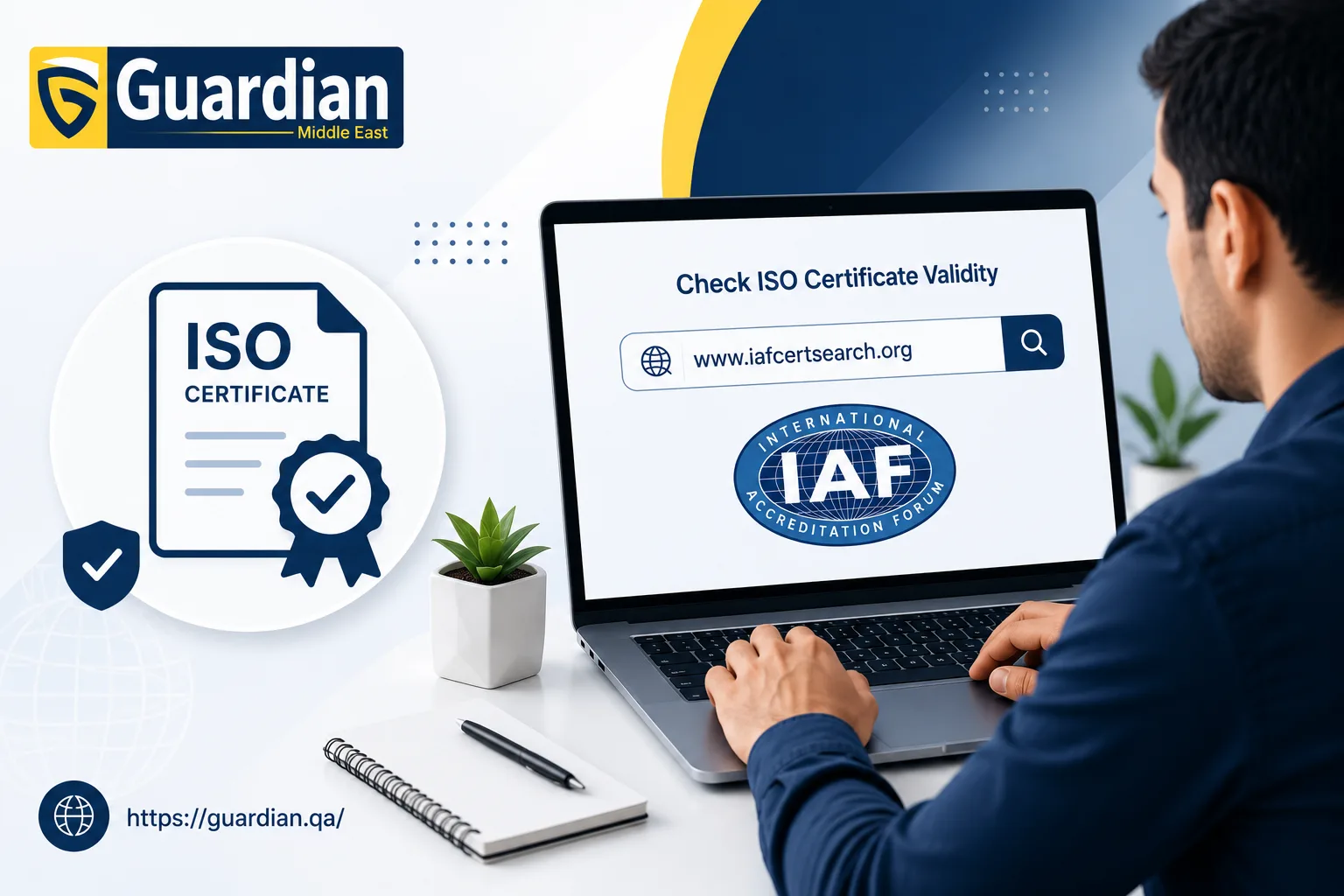
How Can You Check If an ISO Certificate Is Valid?
If someone shares an ISO certificate with you, do not accept it just because it looks professional.
A valid ISO certificate should be more than a nice-looking document. It should be current, traceable, correctly issued, and relevant to the work being offered.
To check ISO certificate validity online, start by reviewing the basic details:
- certificate number
- company name
- ISO standard
- certification scope
- issuing certification body
- accreditation or recognition details
- issue date and expiry date
After that, verify whether the certificate can be traced through the certification body’s official register, IAF CertSearch, or another recognized verification source.
In simple words, certificate verification helps answer one important question:
Is this ISO certificate real, active, and useful for the business purpose it is being presented for?
Why ISO Certificate Verification Matters
ISO certificates are often used for supplier approval, vendor registration, tender submissions, client onboarding, and business credibility.
Why buyers and clients verify ISO certificates
An ISO certificate is often used to build trust, support vendor registration, strengthen tender submissions, and improve buyer confidence. But buyers and clients do not rely on the certificate alone. They verify it because they want to know whether it is genuine, current, and relevant to the actual work.
This matters even more in supplier approval, procurement, contracting, and onboarding. A certificate that cannot be traced or does not match the offered services can raise immediate concerns.
Why validity matters for vendor registration and supplier approval
A certificate that is expired, vague, or not independently verifiable can create delays during buyer review. In real procurement practice, organizations often check not just whether the certificate exists, but whether it is:
- valid
- traceable
- issued to the correct legal entity
- relevant to the activity being offered
- backed by a credible certification body
How to Verify an ISO Certificate in Qatar
How Do You Verify an ISO Certificate?
To verify an ISO certificate in Qatar, check the certificate number, organization name, certification body, accreditation details, certification scope, certificate status, and validity dates. You should also verify the certificate through the issuing certification body’s database and, where applicable, through IAF CertSearch or other recognized verification sources.
A valid ISO certificate should be active, traceable, issued by a credible certification body, and relevant to the services or activities being offered.
Step 1: Review the Certificate Details
Begin by reviewing the information displayed on the certificate. Make sure the following details are clearly shown:
- Certificate number
- Organization name
- Applicable ISO standard (e.g., ISO 9001, ISO 14001, ISO 45001, ISO/IEC 27001)
- Certification body name
- Accreditation body name
- Issue date and expiry date
- Scope of certification
Missing or unclear information should be treated as a warning sign and investigated further. This is especially important when assessing suppliers, contractors, or service providers.
Step 2: Verify the Certification Body
Check whether the certification body issuing the certificate is accredited by an accreditation body that is recognized under the International Accreditation Forum (IAF) Multilateral Recognition Arrangement (MLA).
Accreditation provides confidence that the certification body operates according to internationally accepted requirements and that the certificate is more likely to be accepted by clients, regulators, and tendering authorities.
Step 3: Search the Certificate on IAF CertSearch
Visit the IAF CertSearch public register and search using one of the following:
- Certificate number
- Organization name
- Certification body name
If the certificate is listed, review the information provided and compare it with the details shown on the certificate.
This is one of the most reliable ways to verify the authenticity of an ISO certificate.
Example- Suppose a supplier provides an ISO 9001:2015 certificate with:
- Certificate Number: XYZ12345
- Company Name: ABC Engineering LLC
- Certification Body: Example Certification Services
You can enter either the certificate number or company name into IAF CertSearch and compare:
- Organization name
- Certificate status
- Scope of certification
- Certification body
- Validity dates
If all information matches, the certificate is more likely to be authentic and current.
Step 4: Confirm the Certification Scope
Carefully review the scope of certification to ensure that it covers the activities relevant to the supplier, contractor, or service provider.
For example, a company certified for administrative support services may not be certified for engineering, construction, manufacturing, or other activities outside the stated scope.
Always ensure that the certified scope aligns with the products, services, or activities being offered.
Step 5: Check the Certificate Status
Verify the current status of the certificate. Common statuses include:
- Active
- Suspended
- Withdrawn
- Expired
Only active certificates should be relied upon for supplier approval, contract evaluation, vendor registration, or tender qualification purposes.
Step 6: Verify Validity Dates
Check that the certificate remains within its validity period and has not expired.
Also confirm that required surveillance audits have been maintained throughout the certification cycle, as ongoing conformity is necessary to keep a certificate valid.
Key Takeaway
Verifying an ISO certificate is an important part of supplier evaluation, tender review, procurement, and compliance management.
By checking the certificate details, certification body, accreditation status, scope, validity dates, and certificate traceability, organizations can reduce risk and make more informed business decisions.
Following these steps helps ensure that an ISO certificate is genuine, internationally recognized, and suitable for business, tender, and compliance purposes.
Guardian’s accredited certificates (issued via Guardian Assessment Pvt Ltd and TNV Global Limited) are listed on IAF CertSearch, allowing clients, regulators, and tendering authorities to verify them quickly and independently.
Why a certificate should be checked, not just accepted
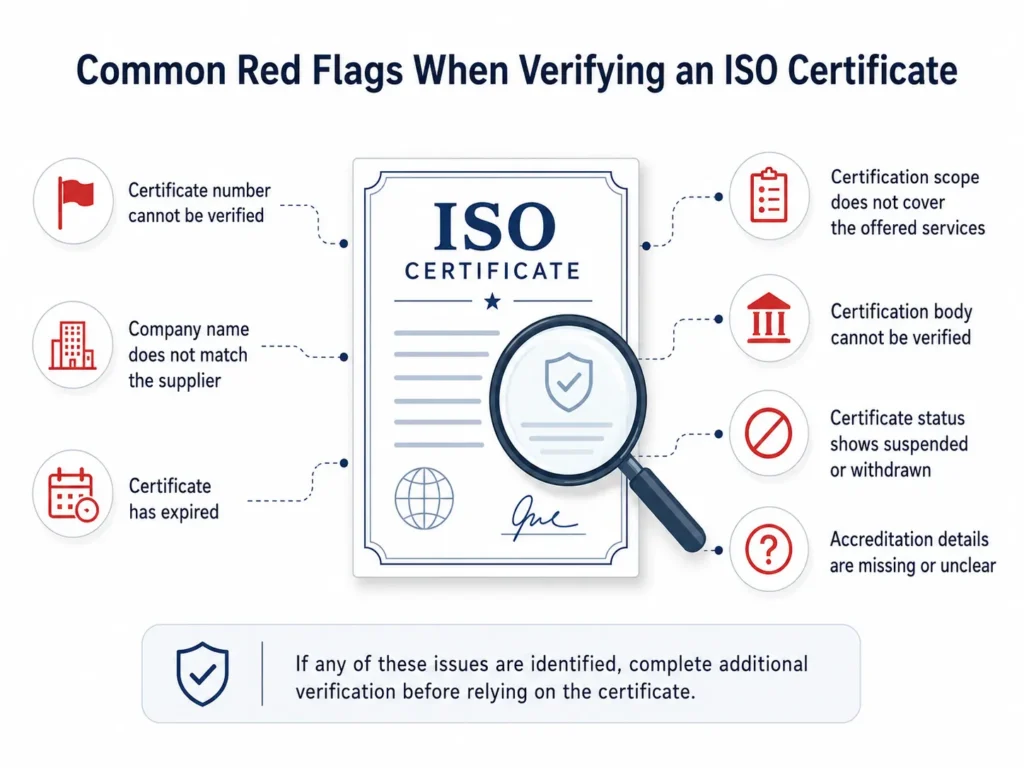
A certificate should be checked because appearance alone is not proof. Some certificates look professional but still raise questions because:
- the scope is too generic
- the certification body is unclear
- the certificate is close to expiry
- the legal entity name does not match
- the certificate cannot be found in an official register
That is why online verification matters.
Why this has become a real business problem in Qatar and the Middle East
In Qatar and the wider Middle East, ISO certificate verification is not just a technical check. It is a practical approval issue. Buyers, procurement teams, contractors, and vendor reviewers often need to confirm whether a certificate is real, current, traceable, and relevant before they move forward with supplier approval.
The actual problem is not only fake certificates. It is also expired certificates, certificates with weak or mismatched scope, certificates issued to the wrong entity, and certificates that cannot be independently verified through a credible online source. That is why certificate verification has become a real business control point rather than a simple administrative step.
A strong Qatar example comes from Ashghal’s September 2024 subcontractor renewal checklist. It requires applicants to submit updated, valid, and traceable ISO 9001:2015, ISO 14001:2015, and ISO 45001:2018 certificates from an accredited certification body, along with the subcontractor name, related scope of work, inspection and test plans, staff and machinery lists, financial statements, authority approvals or licenses, project references, method statements, risk assessments, a compliance statement, and an anti-corruption commitment letter. The checklist also notes that the reviewer may ask for any other details if necessary during the review process. This shows clearly that in Qatar, validity is not treated as a standalone box-ticking issue. It is part of a broader buyer-review process tied to scope, evidence, and operational credibility.
What a Valid ISO Certificate Means
What a valid ISO certificate proves
A valid ISO certificate generally shows that:
- a certification body audited the organization against a specific ISO standard
- the certificate is active within a defined certification cycle
- the organization has a certified management system within a stated scope
- surveillance and continued conformity are part of the certification structure
What it does not prove by itself
Even a valid certificate does not prove that:
- the company is the right supplier for every project
- the scope matches the exact work being offered
- implementation is strong in real operations
- records are current and audit-ready
- the buyer should approve the supplier without further review
Why validity, scope, and traceability all matter
When businesses or buyers verify a certificate, they should look at three things together:
- Validity: is the certificate current and active?
- Scope: does the certification cover the offered services or operations?
- Traceability: can the certificate be independently checked online?
If one of these is weak, the certificate loses value quickly.
Where to Verify an ISO Certificate Online
Certification body website or certificate database
The first and most common place to check is the issuing certification body’s official website or certificate database. Many certification bodies provide searchable directories where users can check:
- certificate number
- organization name
- scope
- certificate status
- certification dates
This is often the first step in ISO certificate verification online and the most direct way to verify an ISO certificate.
IAF CertSearch
One of the most important global tools is IAF CertSearch. It has long been used as a global database for accredited management systems certifications.
This is useful when users want to verify an ISO certificate online through a recognized global search route rather than relying only on the supplier’s certificate copy.
Global ACI recognised accreditation body information
Global ACI is useful when checking the broader accreditation context behind certificate verification. It helps users understand where current recognition information sits and how official accreditation-related information has been reorganized.
This matters when users are trying to understand how to verify an ISO certificate beyond a single database search.
UAF official directory pages
If the certificate or certification body relates to UAF-linked accreditation, the United Accreditation Foundation official site provides useful directory pages such as:
- List of Accredited CABs
- Organizations certified by UAF Accredited CABs
- False Claims of Accreditation
These are practical pages for checking whether the certification body is listed and whether certified organizations can be traced through UAF-linked records.
Why expert verification uses more than one source
From an expert verification perspective, users should not rely on one online source alone. A stronger review process usually checks three layers together. First, verify the certificate directly through the issuing certification body’s official register. Second, check whether the certification body itself appears in an official accreditation or recognition directory. Third, confirm whether the certified organization or certificate can be traced through a recognized certificate search route where available.
In practice, this means users should verify not only the certificate, but also the certification body and its recognition background before relying on the certificate for supplier approval.
Why multiple checks are better than one
One search result is often not enough. A stronger verification process usually checks:
- the certificate itself
- the issuing certification body
- the accreditation or recognition background
- the online traceability of the certificate
- whether the scope and entity details match the real business situation
What Details Should Match on a Genuine ISO Certificate
| Certificate Detail | What to Check | Why It Matters |
| Company Name | The organization name on the certificate should match the supplier, legal entity, or approved operating company being presented | A mismatch can create doubt about whether the certificate actually belongs to the business being reviewed |
| Certificate Number | The number should be unique, clear, and traceable through an official verification route | This helps confirm that the certificate can be independently checked |
| Standard Name and Version | The certificate should clearly state the applicable standard, such as ISO 9001:2015, ISO 14001:2015, ISO 45001:2018, or ISO/IEC 27001:2022 | Buyers need to know exactly which standard the organization is certified against |
| Scope of Certification | The scope should describe the actual certified activities, services, or operations | A certificate is only useful if the scope matches the work being offered |
| Issue Date and Validity Period | The certificate should show when it was issued and how long it remains valid | This helps confirm whether the certificate is still current and usable |
| Certification Body Details | The issuing certification body should be clearly identified | Buyers often verify the certification body before relying on the certificate |
| Accreditation or Recognition Details | Where applicable, the certificate should show accreditation marks, recognition details, or references linked to the certification body’s status | This helps users assess whether the certification background is credible and properly recognized |
Is a Valid ISO Certificate Enough for Buyer Approval?
Why buyers check more than the certificate
A valid certificate helps, but buyers usually check more than validity. They may also review:
- scope relevance
- supporting records
- internal audits
- corrective actions
- project documents
- implementation evidence
Why scope, records, and implementation still matter
A valid certificate is strongest when it is backed by:
- clear scope
- current records
- staff awareness
- practical controls
- evidence that the system is being used in real operations
What supporting documents may still be needed
Depending on the buyer or project, supporting documents may include:
- policies and procedures
- method statements
- risk assessments
- inspection and monitoring records
- training records
- audit records
- corrective action records
- project-specific documents
The expert buyer-review view
An expert buyer-review view is that a valid certificate is only the starting point, not the full approval answer. The first question is whether the certificate is genuine and current. The second is whether the scope matches the actual activity being offered. The third is whether the company can support the certificate with current records such as audits, corrective actions, inspections, training, and project-specific controls. The fourth is whether the legal entity and operational reality match what the certificate claims.
A certificate can be valid and still be weak for approval if any of these areas are unclear. This is why ISO certificate verification for supplier approval is more than a basic validity check. A valid certificate helps most when it is traceable, relevant, supported by records, and clearly linked to the actual supplier being reviewed.
This is why buyers in Qatar and similar Middle East review environments often look beyond the certificate itself. A certificate may be valid, but if it cannot be traced, if the scope is too generic, if the issuing body is difficult to verify, or if the supporting documents are weak, buyer confidence usually drops quickly.
What Businesses Should Keep Ready During ISO Certificate Verification
Certificate copy
Keep the latest certificate copy ready and easy to share.
Verification link or traceable reference
Where possible, keep the official verification route ready, such as the certification body’s database entry or other recognized online reference.
Scope explanation
Be ready to explain how the scope relates to the offered services, site activities, or project work.
Supporting audit and compliance records
Keep current records ready, especially where buyers may ask for evidence beyond the certificate.
Project-specific documents where needed
For tenders, supplier review, or onboarding, project-specific records may be needed to support the certificate in practice.
Common Mistakes Businesses Make When Presenting ISO Certificates
| Mistake | Why It Creates a Problem | Buyer Impact |
| Sending an expired certificate | An expired certificate is no longer reliable for current approval or review purposes | Buyers may reject the submission or ask for an updated certificate before moving forward |
| Sharing a certificate with the wrong scope | The certificate may be valid, but it may not cover the actual services or activities being offered | Buyers may decide that the certificate is not relevant to the work |
| Not checking traceability before submission | If the buyer cannot verify the certificate online, confidence drops quickly | Buyers may request clarification, delay approval, or question authenticity |
| Assuming the buyer will not verify it | Many businesses underestimate how often buyers check certificates during procurement or supplier review | This can lead to avoidable rejection, delay, or deeper scrutiny |
| Ignoring legal entity mismatch | The certificate may belong to a different company, branch, or group entity than the one being presented | Buyers may doubt whether the certification applies to the actual supplier |
| Using unclear or weak certification body information | A certificate from a difficult-to-verify or unclear issuing body may not carry enough trust | Buyers may question the credibility of the certificate itself |
How Guardian Middle East LLC Helps Businesses Present Verifiable ISO Certification
Guardian Middle East LLC helps businesses prepare for certification, maintain audit readiness, improve documentation, and present certificates in a way that supports buyer verification and supplier approval requirements. At Guardian Middle East LLC, based in Doha, we represent Guardian Assessment UK Ltd, a United Kingdom–based certification body recognized by UAF (United Accreditation Foundation) and IAS (International Accreditation Service, USA).
Guardian Middle East LLC (Doha) | Serving Qatar and the Middle East
Location: Abo Hamour Area, Doha, Qatar
P.O. Box: 23277, Doha, Qatar
Mobile: +974 7770 2602 | +974 7213 7770
Email: info@guardian.qa
Website: www.guardian.qa
Key Takeaways
- A valid ISO certificate should be checked, not just accepted.
- The most important checks are validity, scope, traceability, and certification body credibility.
- IAF CertSearch, Global ACI information, certification body databases, and accreditation-related directories can all help with online verification.
- UAF’s official site also provides directory pages for accredited CABs, certified organizations, and false claims of accreditation.
- In Qatar, buyer review often goes beyond certificate validity and also considers scope and supporting evidence.
- A valid and traceable ISO certificate is strongest when it is current, relevant, and supported by real records.
Frequently Asked Questions
Where can I verify an ISO certificate?
ISO certificates can often be verified through:
- Certification body databases
- Official certificate registers
- Accreditation directories
- IAF CertSearch where applicable
How do I know if an ISO certificate is genuine?
A genuine ISO certificate should:
- Show a certificate number
- Match the company name
- Display certification body details
- Include issue and expiry dates
- Be independently traceable online
Can I verify an ISO 9001 certificate online?
Yes. ISO 9001 certificates can usually be verified through the issuing certification body's certificate register or other recognized verification platforms.
What should I do if a certificate cannot be verified?
If a certificate cannot be traced online, ask the supplier for clarification and verify the certification body directly before relying on the certificate.
Is an ISO certificate enough for supplier approval?
Not always. Buyers often review:
- Certification scope
- Supporting records
- Audits
- Risk assessments
- Compliance evidence
along with certificate validity.
Why does certification scope matter?
The scope defines which activities are covered by certification. A certificate may be valid but still not cover the actual services being offered.
What do buyers in Qatar typically verify?
Buyers in Qatar often review:
- Certificate validity
- Certification scope
- Company name
- Traceability
- Supporting compliance records
- Certification body credibility
Before approving suppliers.
Comments are closed