

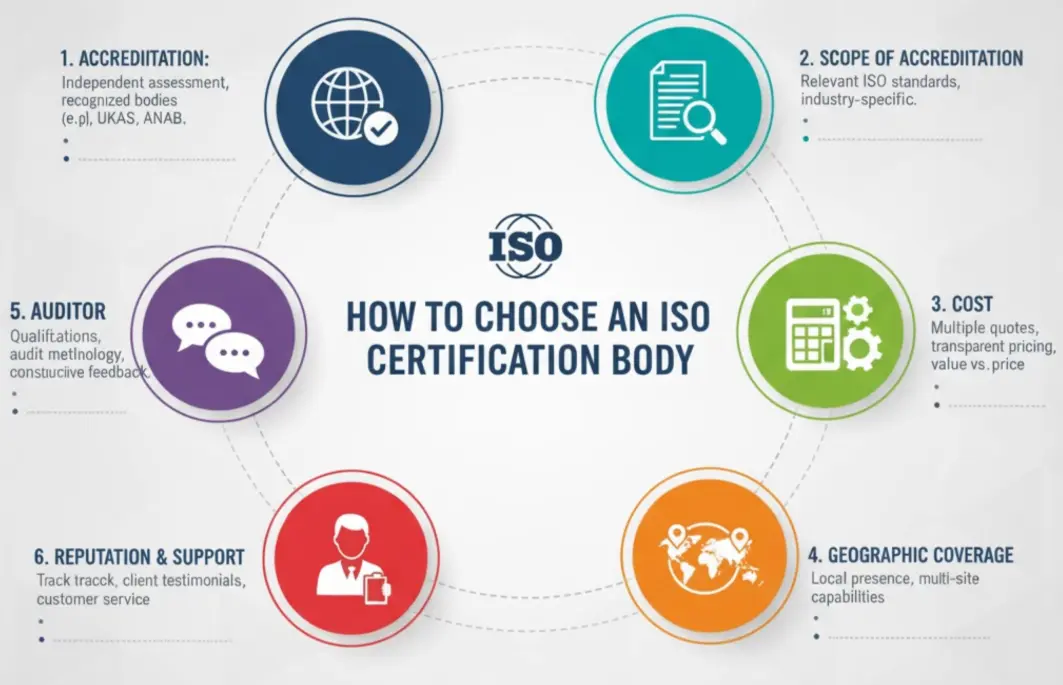
Getting a management system accredited by a ISO certification body is often the next step after an organization implements a management system in accordance with one or more of the ISO management system standards.
An organization must select a certification body if it must certify its management system in accordance with ISO 27001, ISO 9001, ISO 14001, ISO 45001.
The purpose of this essay is to outline key factors to consider when selecting an ISO certification authority.
Why Is Selecting a Certification Body Necessary for an Organization?
The process of ensuring that a company complies with a set of standards (such an ISO standard) is known as certification.
Who will supply the certificate attesting to an organization’s implementation and upkeep of a management system?
An impartial third party in charge of the certification procedure is known as a certification body.
Why Organizations Rely on Certification Bodies
Certification bodies are used by organizations to gain independent recognition.
In a worldwide world where prospective clients cannot travel to possible suppliers or service providers on the other side of the globe, independent recognition is becoming more and more crucial.
Is Self-Certification Possible for an Organization?
It might, but how reliable would that certificate be?
Who would put their trust in it?
Selecting the Appropriate Certification Body Is Crucial
Choosing a certification body is viewed by many organizations as a choice between commodities, meaning they are searching for the best deal.
Price is undoubtedly a significant aspect, but it is not the only one.
If your company just considers price, you can end up dealing with a certifying body that has:
- little experience in your industry
- a poor reputation
- low recognition among potential clients
It could be beneficial for an organization to think about a certification body that can add value to the partnership beyond merely recognizing compliance.
Considerations for Selecting a Certification Body
How do you choose the best ISO certification body when there are so many to pick from?
Since different organizations will value things differently, there is no one-size-fits-all solution.
To be able to obtain more value than merely obtaining a document stating your qualification, there are a few things to think about while selecting a certification organization.
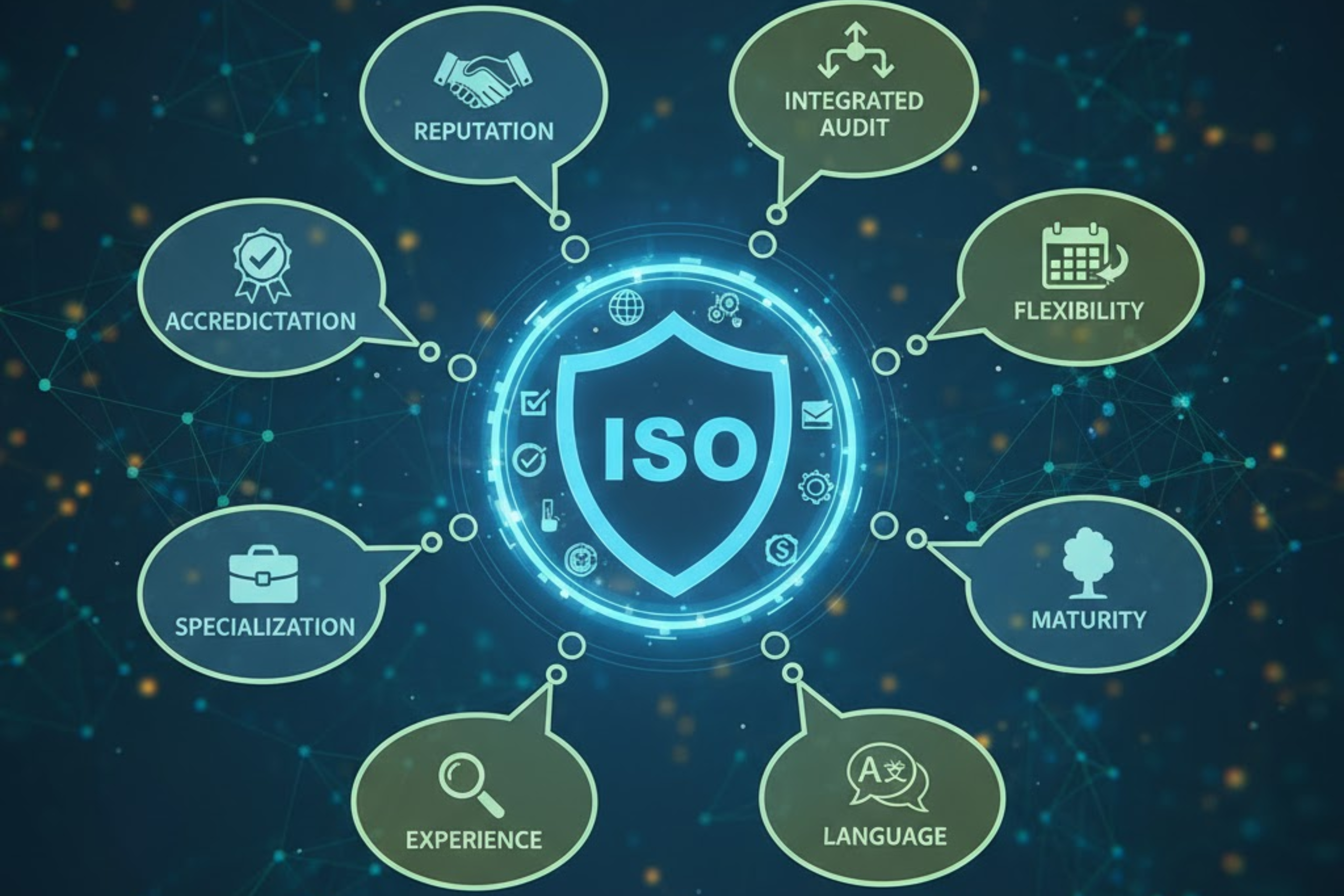
Reputation
- You most likely shouldn’t obtain your certificate from a certification authority that has a reputation for awarding certificates without any requirements if you intend to utilize them for marketing.
- Selecting a certifying authority with a strong, if not flawless, reputation is advised.
Accreditation
- In actuality, anyone can offer you a document stating that they are certified, but not everyone is accredited (i.e., licensed) to do so.
- For this reason, you should verify whether the certification organization is accredited.
- That is, whether they have a license from your country’s local government.
Specialization
- Having a certification authority that has solely certified manufacturing companies in the past is actually not a very smart idea if you are a bank.
- You will spend too much time explaining how the bank operates to their auditors if they have only audited manufacturing companies, even though they may have extensive experience in quality, the environment, safety, and information security.
- As a result, they will learn far more from you than you will from them.
Experience
- It is actually in your best advantage to have an experienced auditor because, otherwise, you might miss out on some important insights, even though you might want to select an inexperienced auditor to get by.
- Therefore, don’t be scared to inquire about the auditor who will audit you.
- Request their resume and/or a list of the organizations they have audited.
Integrated Audit
Instead of engaging separate ISO 27001 and ISO 9001 certification bodies, you can ask your certification body to conduct an integrated audit if you want to implement ISO 14001, ISO 9001, or other standards in addition to ISO 27001.
This means:
- you won’t need to conduct individual audits for every system
- you won’t need to pay the full fee for each one
- you can conduct a single audit for all of these systems at once
This will save you:
- time (an integrated audit takes less time than several separate audits)
- money
Flexibility
- It will be very difficult for you to change the audit date (for example, if you don’t finish your project on time or if another issue arises) if the certification body must fly in the auditor from another continent (because they don’t have anyone locally).
- This is because all the travel arrangements would have already been made.
Maturity
- The management system’s maturity may be a problem if your company has a deadline for certification, such as due to a business commitment, and the system is new.
- Therefore, prior to certification, find out what the certification bodies expect in terms of the management system’s maturity.
Language
- The audit will go much more smoothly if the auditor speaks your language, even though the certification body may offer a translator if needed.
- If there is no language barrier, he will read your materials much more readily and you will be able to build a stronger rapport with him.
Advice on Selecting a Certifying Authority
To begin, consider the advantages your company hopes to gain from accreditation.
You can then begin creating a set of criteria tailored to your own circumstances.
For instance:
- some businesses select a specific certifying body because of its reputation among prospective customers as a result of its experience and knowledge
- other organizations select a certification authority that is well-known in the major export markets
Look for a certifying organization as soon as possible.
After implementing a management system, the majority of firms begin selecting a certification body.
Practical Steps to Follow
- You can begin earlier by requesting estimates from a minimum of two ISO certification organizations.
- Inquire about the additional advantages they can offer in addition to the certification audit.
- For instance, they could be able to offer guidance on the extent of your management system.
- Verify which certification organizations your primary clients or rivals use.
- These certification organizations might be more knowledgeable about your industry and could offer helpful suggestions for improvement.
- Verify the services that are covered.
- Make sure you are comparing comparable items when comparing charges, such as whether travel expenditures or paperwork review are included.
- Next, get in touch with the ISO certification organizations on your short list.
- Schedule a meeting with them to discuss your concerns and assess their potential as partners in areas other than compliance assessment.
There Are Other Factors Besides Price
In a commoditized market, selecting a certification authority can involve much more than just price comparison.
Your company is capable of thinking beyond compliance.
Many businesses overlook the fact that they select and fund the certifying body.
Naturally:
- certifying bodies must adhere to internal procedures and a code of conduct
- if your management system does not meet the norm or standards, they must report nonconformities
However:
- they might provide your management system a new, external appearance that adds value
Therefore, do your research and select the appropriate certification body based on your organization’s values.
The wrong certification body can cost you time, money, and credibility.
How Guardian Middle East Helps You Choose the Right ISO Certification Body
Choosing the wrong certification body can lead to delays, failed audits, and wasted investment. After understanding the key factors, the next step is making the right decision with expert guidance.
Guardian Middle East LLC helps you avoid costly mistakes by guiding you in selecting a credible, accredited certification body that aligns with your industry, business goals, and compliance requirements.
As the exclusive representative of Guardian Assessment UK Ltd., a United Kingdom–based certification body accredited by the United Accreditation Foundation (UAF) and International Accreditation Service (IAS, USA), we ensure your certification journey is structured, reliable, and globally recognized.
What We Help You Achieve
- Select a trusted and accredited ISO certification body
- Avoid delays, rework, and audit failures
- Prepare complete, audit-ready documentation
- Align your processes with ISO requirements from day one
- Achieve certification faster and more efficiently
Support Beyond Certification
- End-to-end audit preparation and coordination
- Expert guidance during certification body selection
- Continuous improvement for long-term compliance
- Ongoing system support to maintain certification
Ready to Make the Right Certification Decision?
The certification body you choose directly impacts your credibility, client trust, and business growth.
Don’t risk working with the wrong partner.
👉 Get expert guidance, make the right choice the first time, and move towards ISO certification with confidence.
Get in Touch
Located in Doha, Qatar | Serving the Middle East
Mobile: +974 7770 2602 | +974 7213 7770
Email: info@guardian.qa
Website: guardian.qa
👉 Contact us today and take the first step toward a smooth, successful ISO certification journey.
Frequently Asked Questions
1) What is an ISO certification body?
A certification body is an independent third party that audits your management system against an ISO standard and issues the certificate if you meet the requirements.
2) Why is accreditation important when choosing a certification body?
Accreditation shows the certification body is formally approved to issue certificates under a recognised accreditation framework. It helps confirm legitimacy and improves acceptance with buyers and stakeholders.
3) Can a company self-certify to ISO standards?
A company can claim internal alignment, but most clients and stakeholders do not treat self-certified claims the same as an independent third-party certificate.
4) How do I verify whether a certification body is credible?
Check the body’s accreditation status, reputation, industry experience, and whether it is recognised in your target markets. You can also ask for auditor profiles and past industry audit experience.
5) Should I choose the cheapest certification body?
Price matters, but choosing only on cost can lead to issues such as weak industry experience, poor recognition, or low audit value. It’s better to compare price along with credibility and fit.
6) What is an integrated audit and when does it help?
An integrated audit is when one certification body audits multiple ISO standards together (for example ISO 9001, ISO 14001, ISO 45001, ISO 27001). It can save time, reduce audit disruption, and lower overall costs.
7) How early should we contact certification bodies?
It’s best to start early, even while implementing your management system. Early discussions help you understand audit expectations, plan timelines, and avoid last-minute scheduling issues.
Comments are closed