

What Is ISO 9001 Certification Cost in Qatar?
ISO 9001 certification cost in Qatar typically ranges from $1,500 to $25,000+, depending on company size, scope of certification, number of locations, and level of preparedness. Smaller businesses fall on the lower end, while larger or more complex organizations require higher investment due to extended audit duration and broader operational scope.
ISO 9001 Cost in Qatar – Quick Breakdown
- Small business (1–20 employees): $1,500 – $4,000
- Medium business (20–100 employees): $4,000 – $10,000
- Large organization (100+ employees): $10,000 – $25,000+
- Certification validity: 3 years (with annual surveillance audits)
- Cost depends on: company size, scope, industry, locations, and readiness level
Understanding ISO 9001 Certification Cost: What Businesses Often Overlook
When businesses first explore ISO 9001 certification in Qatar, the first question is usually:
“How much does ISO 9001 certification cost?”
But the more important question is:
“What am I actually paying for—and what value will it deliver to my business?”
ISO 9001 certification cost refers to the total investment required for implementation, audit, certification, and ongoing compliance of a quality management system.
ISO 9001 certification is not a fixed-price service. It’s a strategic investment in building a structured system that improves quality, reduces errors, and enhances long-term business performance.
In Practice
A small trading company in Doha may assume certification is expensive, but if their processes are already structured, their cost can be significantly lower than expected.
Key Insight
Organizations that approach ISO 9001 as a business improvement tool (not just a certificate) often see 25–30% improvement in operational efficiency.
Why Does ISO 9001 Certification Cost Vary Between Companies in Qatar?
ISO 9001 certification cost varies because every organization has a different structure, scope, and level of readiness.
Factors such as company size, industry complexity, number of locations, and compliance requirements in Qatar directly influence audit time, consultancy effort, and total cost.
Key Factors That Directly Impact ISO 9001 Certification Cost
1. Company Size and Workforce
- Larger organizations require longer audit durations
- More employees = more processes, departments, and records to review
In Practice:
A company with 10 employees may need 2–3 audit days, while a company with 100+ employees may require 5–7 days due to increased operational complexity.
2. Scope of Certification
- Broader scope increases cost
- More activities = more documentation and audit coverage
In Practice:
Certifying only “manufacturing” is more cost-effective than certifying “manufacturing + design + distribution.”
3. Industry Complexity
- Highly regulated industries require deeper audits
- Risk level directly affects audit intensity
In Practice:
Oil & gas companies in Qatar require stricter compliance checks compared to small service-based businesses.
4. Number of Locations
- Multiple sites increase audit effort, coordination, and travel requirements
- Each location must be assessed for compliance
5. Level of Preparedness
- Better preparation = lower implementation cost
- Existing systems reduce consultancy effort
Key Insight
Companies with existing quality systems can reduce implementation costs by 20–40%.
Breaking Down ISO 9001 Certification Costs: Where Your Money Goes
ISO 9001 Cost Components (Simple Breakdown)
- Implementation & consultancy: 20–30%
- Certification audit (Stage 1 & Stage 2): 40–50%
- Certification & registration: 10–15%
- Ongoing maintenance & surveillance: recurring
1. Implementation & Consultancy
Includes:
- Gap analysis
- Documentation (policies, procedures, SOPs)
- Employee training
In Practice:
Companies starting from scratch may require full consultancy, while others may only need guidance.
2. Certification Audit (Stage 1 & Stage 2)
- Stage 1: Documentation review
- Stage 2: Full implementation audit
Key Insight
Audit costs typically account for 40–50% of total ISO 9001 certification cost.
3. Certification & Registration Fees
- Certificate issuance
- Accreditation charges
4. Surveillance Audits (Annual)
- Conducted every year
- Ensures ongoing compliance over a 3-year cycle
5. Recertification Costs
- Required every 3 years
- Ensures continued compliance with updated standards
Realistic ISO 9001 Certification Cost in Qatar (2026)
The table below provides a general indication of ISO 9001 certification costs. Actual pricing in Qatar may vary depending on scope, industry, and preparedness.
Estimated ISO 9001 Certification Cost Range (Indicative)
| Business Size | Estimated Cost Range |
| Small Businesses (1–20 employees) | $1,500 – $4,000 |
| Medium Businesses (20–100 employees) | $4,000 – $10,000 |
| Large Organizations (100+ employees) | $10,000 – $25,000+ |
Note:
In Qatar, certification bodies assess each organization individually before providing a final quotation based on audit scope, operational complexity, and risk level.
In Practice
A medium-sized logistics company in Doha may spend around $6,000–$8,000, depending on scope and readiness.
Key Insight
Proper implementation can reduce long-term costs by up to 30%.
How Certification Bodies Calculate ISO 9001 Audit Cost
- Based on international IAF guidelines
- Audit days depend on employee count
- Industry risk level affects audit depth
- Multi-site businesses may use sampling methods
This ensures that ISO 9001 certification cost is fair, structured, and aligned with global standards.
Hidden Costs of ISO 9001 Certification You Should Not Ignore
1. Internal Training & Resources
- Employee training and awareness programs
- Time investment from internal teams
2. Documentation & Process Setup
- Creating SOPs, workflows, and policies
- Aligning departments with ISO requirements
3. Time & Productivity Adjustments
- Initial implementation may slow operations
- Teams need time to adapt
In Practice:
Companies in Qatar may spend 1–2 months aligning processes before certification.
Is ISO 9001 Certification Worth the Investment? (ROI Perspective)
ISO 9001 certification is not an expense—it’s a long-term business investment.
ROI comes from:
- Reduced operational errors
- Improved efficiency and process control
- Higher customer satisfaction and retention
Key Insight
Businesses report:
- 20–30% efficiency improvement
- 15–20% cost reduction
Cost vs Value: How ISO 9001 Drives Business Growth in Qatar
ISO 9001 delivers value beyond cost by helping businesses:
- Build trust with clients and stakeholders
- Improve brand reputation
- Qualify for government and large-scale tenders in Qatar
In Practice:
Companies in Doha and across Qatar often require ISO certification to participate in tenders and procurement processes.
Need Expert Guidance on ISO 9001 Certification in Qatar?
If you’re planning ISO 9001 certification, the right guidance can help you reduce cost, save time, and avoid mistakes.
At Guardian Middle East LLC, we help businesses across Qatar:
- Understand exact certification requirements
- Optimize cost with the right strategy
- Prepare for audits with confidence
- Achieve globally recognized certification
Talk to our experts today to get clarity on your ISO 9001 certification journey.
Key Insight
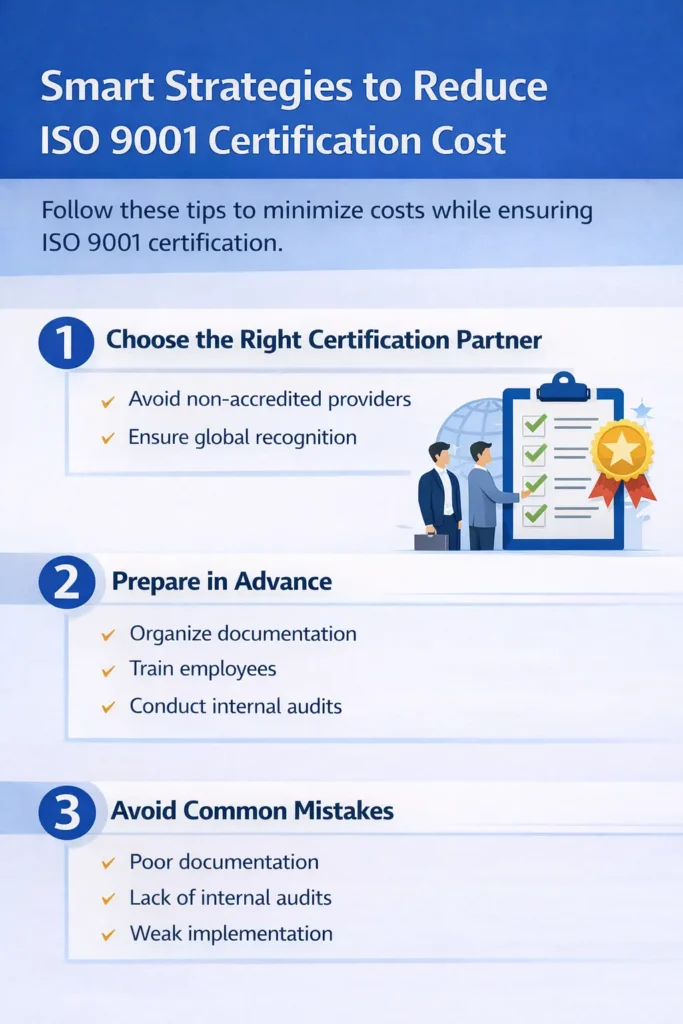
Proper preparation can reduce total certification cost by 15–25%.
How to Get an Accurate ISO 9001 Certification Quote in Qatar
To receive a precise quotation, provide:
- Company size
- Scope of certification
- Number of locations
- Current system status
In Practice:
Businesses that provide complete details receive faster and more accurate quotations.
Final Thought
ISO 9001 certification cost should not be viewed as just an expense—it’s a strategic investment in building a structured, efficient, and performance-driven organization. Instead of focusing only on the initial cost, businesses should evaluate the long-term value it delivers through improved processes, reduced errors, better resource utilization, and consistent quality outcomes.
More importantly, ISO 9001 creates a scalable foundation for long-term growth. It strengthens market credibility, improves tender success rates in Qatar, and helps organizations adapt to evolving client and regulatory expectations. Businesses that understand both the cost and value are better positioned to achieve sustainable success in competitive markets.
How Guardian Middle East Supports Your ISO Certification Journey in Qatar
After understanding the cost and value, the next step is choosing the right partner.
Guardian Middle East LLC supports companies in Qatar with ISO certification by helping you plan the scope, prepare the required documentation, implement the system in daily operations, and get ready for the certification audit.
As the exclusive representative of Guardian Assessment UK Ltd., a United Kingdom–based certification body operating under internationally recognized accreditation by the United Accreditation Foundation (UAF) and International Accreditation Service (IAS, USA), we support organizations with a structured certification journey and clear audit preparation. Based in Doha, we understand how procurement, tender expectations, and client audits typically work in Qatar.
What We Help You Achieve
- Define a clear certification scope
- Prepare audit-ready documentation
- Implement ISO processes in daily operations
- Ensure readiness for certification audits
Support Beyond Certification
- Surveillance audit preparation
- Continuous improvement strategies
- System maintenance for long-term effectiveness
Ready to Strengthen Your Business With ISO Certification in Qatar?
ISO certification is more than a document—it’s a structured system that improves consistency, builds trust, and enhances performance.
For companies in Qatar looking to improve efficiency, reduce errors, and win more tenders, ISO certification is a powerful long-term investment.
Get in Touch
Located in Doha, Qatar | Serving the Middle East
Mobile: +974 7770 2602 | +974 7213 7770
Email: info@guardian.qa
Website: www.guardian.qa
Contact us today to discuss your requirements and start your ISO certification journey with confidence.
Frequently Asked Questions
1. What is the average ISO 9001 certification cost in Qatar for different business sizes?
In Qatar, ISO 9001 certification cost typically varies based on business size and complexity. Small businesses may invest on the lower end due to fewer processes and shorter audit duration, while medium and large organizations require higher investment because of broader scope, multiple departments, and longer audit timelines. The final cost is always determined after evaluating your company’s structure, risk level, and readiness for certification.
2. Why do ISO 9001 certification costs differ between companies in the same industry?
Even within the same industry, ISO 9001 certification cost can vary significantly due to differences in operational structure, number of employees, number of locations, and process maturity. For example, two companies in Doha may operate in the same sector, but one with well-defined processes and documentation will incur lower implementation costs compared to another starting from scratch.
3. How do certification bodies calculate ISO 9001 audit cost in Qatar?
Certification bodies follow international guidelines (such as IAF standards) to calculate audit cost. The cost is mainly based on:
Number of employees
Scope of certification
Industry risk level
Number of business locations
These factors determine the number of audit days required, which directly impacts the overall certification cost.
4. Is ISO 9001 certification mandatory for businesses in Qatar?
ISO 9001 certification is not legally mandatory, but it is often required for government tenders, large-scale projects, and corporate contracts in Qatar. Many organizations adopt it to improve credibility, meet client expectations, and gain a competitive advantage.
Comments are closed