
Guardian Middle East LLC

Shape Image

Frequently Asked Questions (FAQ)

Have questions you want answers to?

Compliance certification is the process of verifying that a business or organization meets specific industry standards and regulations. It demonstrates adherence to quality, safety, and legal requirements.

The required certification depends on your industry and objectives. For example, ISO 9001 is for quality management, while ISO 27001 is for information security. Our experts can help you choose the right certification.

The timeline varies based on the certification type and business complexity. On average, it takes 4 to 12 weeks, including consultation, audit, and certification issuance.

The audit involves a thorough review of your organization’s processes, policies, and compliance practices. Our auditors assess whether you meet the required standards before recommending certification.

Certification costs vary depending on the scope, industry, and complexity of the business. We provide detailed quotes based on your specific requirements.


ISO certification is not legally mandatory but is often required in industries where quality, security, and compliance are essential. Many businesses pursue certification to meet client expectations and regulatory requirements.


Most certifications are valid for three years, with annual surveillance audits to ensure ongoing compliance. After the certification period, you will need to undergo a recertification audit.


If your organization does not meet the certification criteria, we provide a corrective action plan. You will have time to address the gaps before undergoing a re-audit


Yes, small businesses can obtain ISO certification. The standards are designed to be flexible and can be adapted to fit the needs and scale of any organization.


ISO certifications are typically valid for three years. During this period, businesses must undergo regular surveillance audits to ensure continued compliance.


Certification is the process where an organization is assessed and verified to meet ISO standards. Accreditation, on the other hand, is given to certification bodies, ensuring they are competent to perform ISO certifications.


Hiring a consultant is not mandatory, but it can help streamline the certification process. Consultants provide expertise in documentation, training, and implementation to ensure a smooth transition to compliance.


We have a strict quality assurance program that includes real-time supervision, random audits, and performance reviews to ensure our inspectors follow strict protocols and maintain accuracy.


Repeated quality issues indicate that corrective actions have not been fully implemented or followed. We recommend working closely with suppliers to address the root cause of recurring issues.


Yes, in most cases, we provide same-day inspection reports, allowing you to make timely decisions. However, complex inspections may require additional time for detailed analysis.


Our inspectors typically work 8 hours per day, including inspection time, documentation, and reporting.


If production is not ready, you can reschedule the inspection. We recommend confirming production readiness before booking to avoid delays.

Why was my inspection not completed?

Incomplete inspections can occur due to production delays, access restrictions, or missing documentation. We provide detailed feedback in such cases and offer re-inspection options


AQL (Acceptable Quality Limit) is a standard used in quality control to define the maximum acceptable number of defects in a batch before it is rejected.


The type of inspection depends on your needs. Common inspections include:

  • Pre-production inspections: Verify raw materials and initial production.
  • During production inspections (DUPRO): Monitor quality during manufacturing.
  • Final random inspections (FRI): Ensure finished products meet standards before shipment.

Get a Quote

    ShapeBlog & Articles

    Every Single Update From Tnv Verisure

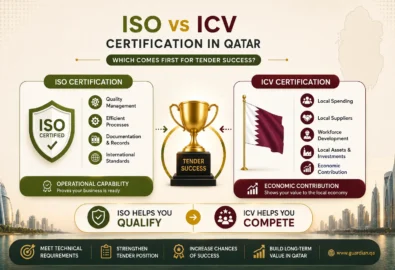
    Illustration comparing ISO Certification in Qatar and ICV certification, showing that ISO focuses on business management systems while ICV measures contribution to the local economy.July 4, 2026

    ISO vs ICV Certification in Qatar: Which Comes First for

    For companies bidding, ISO certification in Qatar and ICV certification are not the same thing. They both matter
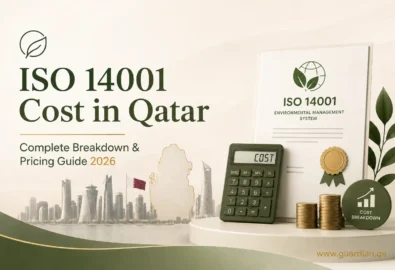
    ISO 14001 Certification Cost in Qatar featured image with certificate, calculator, cost breakdown, and environmental management visuals.June 26, 2026

    How much does ISO 14001 certification cost in Qatar?: Complete

    What is the ISO 14001 Certification Cost in Qatar? ISO 14001 certification in Qatar usually costs between $1,800

    ISO 14001 certification in Qatar showing environmental management system, sustainability, compliance, and business benefits with green and gold design.June 24, 2026

    ISO 14001 Certification in Qatar: Why More Businesses Are Adopting

    Introduction ISO 14001 certification is getting more attention in Qatar because businesses are under more pressure to manage