

Guardian Middle East LLC

ISO Certification for Healthcare Industry

Introduction

The healthcare industry in the Middle East is one of the region’s most essential sectors, supporting public wellbeing, national development, and economic progress. From hospitals and clinics to diagnostic centres, laboratories, pharmacies, and specialised care providers, healthcare operates in a highly demanding environment where patient safety, service quality, data protection, and regulatory control are critical. To deliver consistent care and maintain trust in such a high-responsibility sector, organisations must show a clear commitment to operational excellence and internationally recognised standards, and many healthcare providers pursue ISO certification for healthcare industry to strengthen credibility, consistency, and performance.

Guardian Middle East LLC supports healthcare organisations across the Middle East with ISO certification by helping them build clear documentation, effective controls, and audit readiness that reflect real clinical and operational risks and industry expectations. This approach supports safer patient services, stronger process consistency, and more reliable performance across departments, staff, and service partners.

ISO’s Role in Quality and Efficiency for the Healthcare Industry

ISO certification for the healthcare industry is more than a credential. It is a structured way to manage risk, improve service control, and strengthen reliability in day-to-day healthcare operations.

Ensuring Quality and Consistency– Quality and consistency are essential in healthcare, where gaps in processes can affect patient outcomes and service reliability. ISO 9001 provides a quality management system framework that supports control across key areas such as patient service processes, scheduling, clinical support services, supplier management, and patient feedback handling. It helps standardise procedures, reduce errors, improve traceability of actions and records, and strengthen patient and stakeholder confidence.

Enhancing Health and Safety- Healthcare environments involve infection risks, hazardous substances, sharp instruments, emergency situations, and high patient volumes. ISO 45001 supports a systematic approach to identifying and reducing workplace risks, improving safety controls, strengthening training and accountability, and reducing disruption caused by incidents, injuries, and unsafe conditions for staff, patients, and visitors.

Minimising Environmental Impact- Healthcare organisations generate medical waste, use chemicals, consume high energy and water, and must manage emissions and disposal responsibly. ISO 14001 supports organisations in managing environmental aspects effectively by helping reduce waste, strengthen waste segregation and disposal controls, improve resource efficiency, improve emergency preparedness, and meet applicable environmental obligations.

Boosting Operational Efficiency– ISO standards encourage a culture of continual improvement, which is especially valuable in healthcare where delays, poor coordination, and process variation can impact patient experience and service delivery. By standardising processes, improving control, reducing inefficiencies, and supporting better planning, healthcare organisations can improve service flow, reduce rework, strengthen performance monitoring, and increase overall efficiency.

Essential ISO Standards for the Healthcare Industry

Guardian Middle East LLC offers certification for a range of key standards that are most relevant to the healthcare industry in Qatar.

  • ISO 9001 (Quality Management System): This foundational standard is crucial for hospitals, clinics, and laboratories. It provides a framework for consistent service delivery, enhances patient satisfaction, and drives continual improvement in administrative and clinical processes.
  • ISO 13485 (Medical Devices Quality Management System): This is a critical, sector-specific standard for organizations that manufacture, distribute, or service medical devices. It outlines requirements for a quality management system focused on the safety and effectiveness of medical equipment.
  • ISO/IEC 27001 (Information Security Management System): A vital standard for protecting electronic health records (EHRs) and other sensitive patient information, ensuring data integrity and confidentiality.
  • ISO 45001 (Occupational Health & Safety Management System): Essential for creating a safe working environment for medical professionals, and for managing risks associated with biohazards, medical equipment, and other workplace dangers.

Middle East Market Access Expectations: Healthcare Organizations Are Preparing For

Healthcare companies across the GCC and wider Middle East are facing higher expectations for patient safety, regulatory readiness, clinical governance, staff competence, documentation control, and audit preparedness. Many hospitals, clinics, laboratories, diagnostic centres, and healthcare providers are expected to maintain clear records, controlled procedures, risk-based management, and consistent quality across patient care, support services, and administrative functions.

Key areas healthcare companies often prepare for include

  • GCC regulatory and healthcare quality expectations– Maintain controlled procedures, patient records, clinical documentation, staff credentials, and traceability across healthcare services and support functions.
  • Saudi Arabia healthcare licensing and provider requirements– Strengthen quality records, risk controls, staff training, and documented operational processes to support inspections, approvals, and healthcare service delivery.
  • UAE tenders and healthcare procurement expectations– Improve documentation, performance monitoring, audit readiness, and consistent management systems to support tender participation and supplier or provider qualification
  • Regional patient safety and service quality expectations– Use controlled systems to manage clinical risks, patient safety incidents, infection control, service quality, and emergency response across facilities.
  • Medical equipment and maintenance control– Keep maintenance records, calibration reports, validation records, and corrective action logs organised to support accuracy, safety, and continuity of care.
  • Third-party provider and supplier control across locations– Use a clear approval process, performance monitoring, and documented controls to reduce service, supply, and operational risks.
  • Multi-site consistency across healthcare operations– Standardise procedures, training, internal audits, and monitoring so quality and patient safety remain consistent across different branches and departments.
  • Audit readiness for authorities, patients, and stakeholders– Maintain evidence of implementation, monitoring, risk controls, and continual improvement to support external audits, inspections, and stakeholder expectations.

ISO certification for the healthcare industry helps organizations build repeatable controls, documented evidence, and operational consistency that support inspections, service quality, patient safety, and regulatory expectations across Middle East markets.
ISO Certification Requirements

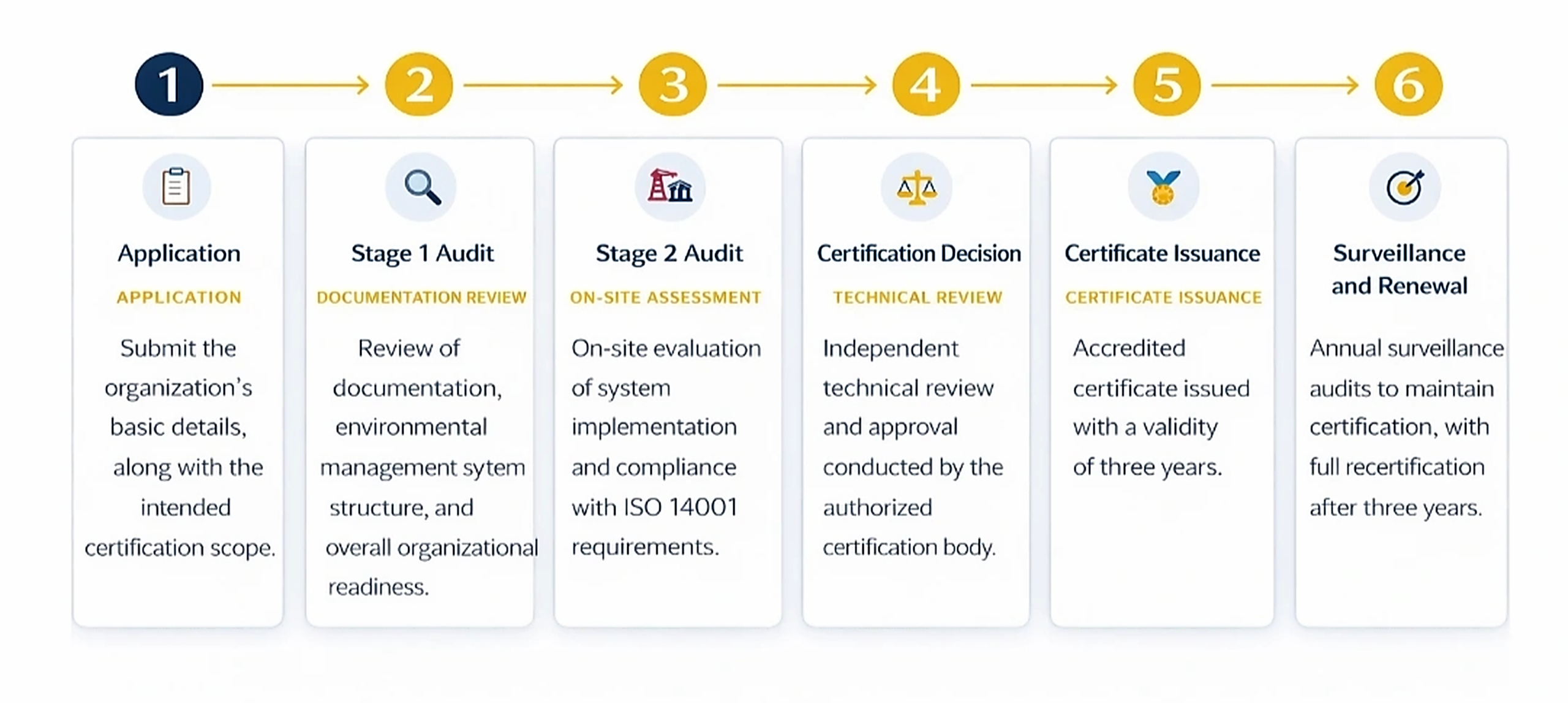
To achieve ISO certification for the healthcare industry, an organization must demonstrate commitment to the following requirements:

  • Top management commitment – Leadership must support the management system by providing direction, resources, and accountability.
  • Legal and regulatory obligations – The organisation must identify and meet applicable legal, regulatory, and customer requirements relevant to its operations.
  • Establish a management system – A documented management system must be developed and implemented in line with the selected ISO standard.
  • Comprehensive documentation and records – The organisation must maintain effective documentation and evidence of implementation, monitoring, and control.
  • Internal audits and management review – Regular internal audits and management reviews are required to verify effectiveness and drive continual improvement.

Your Path to ISO Certification

Energy Industry

Who We Represent and How We Support Healthcare Organizations

At Guardian Middle East LLC, based in Doha, we represent Guardian Assessment Pvt. Ltd., India, an accredited certification body recognised by UAF (United Accreditation Foundation) and IAS (International Accreditation Service, USA). Through this representation, we support healthcare organisations across the Middle East with ISO certification support and audit preparation, helping them demonstrate strong management systems for regional and international operations.

The Guardian Advantage for Healthcare Businesses in the Middle East

As one of the ISO certification companies serving the Middle East, Guardian Middle East LLC supports healthcare businesses with a structured certification journey focused on clarity, audit readiness, and practical implementation.

  • Accredited and trusted approach – Certificates are issued through an accredited certification process and can be verified through recognised certificate verification databases, where applicable, supporting customer and partner confidence.

  • Regional expertise – With a strong understanding of Middle East market conditions, regulatory expectations, and healthcare service requirements, we support a smooth certification journey aligned with industry needs.

  • Experienced auditors – Audits are conducted by qualified auditors with healthcare sector experience, providing a professional and value-added assessment of management systems.

Ready for ISO Certification? Let’s Get Started

Want to strengthen your healthcare services with a system that regulators, patients, and stakeholders trust? Talk to Guardian Middle East LLC to choose the right ISO standards for your facility, align documentation and controls across departments and sites, and move confidently toward certification. Share a few details about your services, locations, and current processes, and we’ll outline a clear and practical next-step plan.

Contact Guardian Middle East LLC (Doha) | Serving the Middle East
Location: Abo Hamour Area, Doha, Qatar
P.O. Box: 23277, Doha, Qatar
Mobile: +974 7213 7770 | +974 7770 2602
Email: info@guardian.qa
Website: www.guardian.qa

Frequently Asked Questions

ISO 13485 is the global standard for quality management systems for medical devices. It ensures that every step, from design and manufacturing to distribution and disposal, is controlled to ensure the safety and effectiveness of the device.

ISO 9001 helps healthcare facilities standardize their administrative and clinical processes, leading to more consistent and reliable service. This reduces wait times, improves communication, and ensures patients receive high-quality, predictable care, directly boosting satisfaction.

While ISO certification might not be a mandatory licensing requirement in all cases, it is often a critical factor for demonstrating a commitment to quality and safety, which is essential for working with government health bodies and for maintaining public trust.

ISO/IEC 27001 provides a framework for an information security management system. This is crucial for healthcare providers to protect electronic health records from data breaches, cyberattacks, and unauthorized access, ensuring patient privacy and confidentiality.

Let’s discuss your Iso Certification needs—reach out today