
ISO Certification for Manufacturing Industry

ISO Certification for Manufacturing Industry
Quick Contact
Introduction
The Manufacturing Industry in the Middle East is one of the region’s most important sectors, supporting economic growth, industrial diversification, infrastructure development, and national development goals. From the production of consumer goods to complex industrial components, this industry operates in a highly demanding environment where quality consistency, safety, efficiency, and regulatory control are essential. To perform successfully in such a competitive and production-driven sector, organisations must show a clear commitment to operational excellence and internationally recognised standards, and many businesses pursue ISO Certification for Manufacturing Industry to strengthen credibility, consistency, and performance.
Guardian Middle East LLC supports manufacturing organizations across the Middle East with ISO certification by building clear documentation, strong controls, and audit readiness that match real operational risks and buyer expectations. As the regional representative of Guardian Assessment UK Ltd., a United Kingdom–based accredited ISO certification body recognized by UAF (United Accreditation Foundation) and IAS (International Accreditation Service, USA), we help organizations strengthen process consistency, reduce defects and rework, and improve reliability across production teams, suppliers, and multi-site operations.
ISO Certification for Manufacturing Industry: What It Means and Why It Matters
ISO certification for Manufacturing Industry helps manufacturers build a reliable system to manage quality, documentation, process control, and operational risk. In manufacturing, buyers and supply chain partners often look for proof that a company follows structured standards, maintains consistent records, and delivers products without avoidable errors.
- What ISO actually does: ISO creates international standards and guidance that help organisations improve how they work. ISO itself does not issue certificates. Certification is issued by independent third-party certification bodies after they audit your systems and confirm you meet the standard requirements.
- Why ISO certification matters for manufacturers: Manufacturing operations involve multiple checkpoints such as supplier approval, incoming inspection, production planning, process controls, in-process checks, final inspection, packaging, storage, and dispatch. Small gaps can lead to defects, customer complaints, delayed deliveries, and costly rework. ISO certification helps you build discipline across the entire production cycle.
- Is ISO certification compulsory for manufacturing companies?: In most cases, ISO certification is not legally compulsory. However, it often becomes important when you want to qualify as an approved supplier, meet tender requirements, win large buyers, or compete in export-focused markets.
- Why does it help you grow globally: Buyers prefer manufacturers who can prove consistent quality, traceability, and controlled processes. ISO certification helps show that your organisation follows a recognised system and maintains consistent performance, supporting long-term partnerships and stronger market acceptance.
Benefits of ISO Certification for Manufacturing Industry
For manufacturing businesses, ISO certification for Manufacturing Industry creates a structured way to manage quality, operational control, environmental responsibilities, workplace safety, and continuity using key standards such as ISO 9001, ISO 14001, ISO 45001, ISO 50001, and ISO 22301.
- Stronger Product Quality and Consistency (ISO 9001): Standardised processes reduce variation, defects, and rework, helping deliver consistent output across batches, shifts, and sites.
- Better Traceability and Audit Readiness (ISO 9001): Controlled documentation makes it easier to track materials, production records, inspections, and corrective actions, and respond quickly to audits with clear evidence.
- Lower Operational Risk and Fewer Disruptions (ISO 45001, ISO 22301): Risk-based controls improve safety and strengthen continuity planning, reducing the impact of incidents, downtime, and supply chain disruption.
- Improved Environmental and Energy Performance (ISO 14001, ISO 50001): Structured environmental and energy management helps reduce waste, improve resource efficiency, and strengthen performance monitoring.
- Improved Trust with Buyers and Partners (ISO 9001, ISO 14001): A structured ISO system builds confidence in product quality, responsible operations, and consistent delivery, supporting tenders and long-term partnerships.
Essential ISO Standards for the Manufacturing Industry
Guardian Middle East LLC offers certification for a range of key standards that are most relevant to manufacturing operations across the Middle East.
01

Quality Management System
ISO 9001
A core standard for manufacturers that improves product quality, customer satisfaction, supplier control, and continual improvement across operations.
02

Environmental Management System
ISO 14001
A vital standard for managing environmental aspects of manufacturing operations, including energy consumption, water usage, emissions, and waste disposal.
03

Occupational Health & Safety Management System
ISO 45001
Essential for creating a safer workplace and managing risks associated with production environments, contractor activities, and site operations.
04

Energy Management Systems
ISO 50001
Important for energy-intensive operations. It provides a framework to optimise energy use, reduce costs, and improve environmental performance.
Middle East Market Access Expectations: Manufacturers Are Preparing For
Manufacturers working across the GCC and wider Middle East are facing higher expectations for product conformity, traceability, supplier control, and audit readiness. Many buyers and regulators expect clear records, controlled technical documentation, and consistent product identification, especially for regulated goods and tender-driven supply chains.
Key areas manufacturers often prepare for include:
- GCC technical regulations and G-Mark readiness (where applicable): Maintain technical documentation, product controls, and traceability for regulated products sold across GCC markets.
- Saudi Arabia (SALEEM / SABER): Keep inspection and test records, strengthen supplier checks, and maintain documented product controls to support conformity steps.
- UAE tenders and localisation-focused procurement (ICV): Improve documentation, performance tracking, and consistent processes to support tender evaluation and supplier qualification.
- Regional product conformity and verification needs (where applicable): Use controlled documents, proper product identification, and regular quality checks to support market acceptance.
- Kuwait (KUCAS) for regulated goods: Keep test reports, technical files, and quality records organised to reduce delays, re-checks, and rework.
- GCC-wide market surveillance and traceability: Strengthen batch or lot traceability, complaint handling, corrective actions, and record control to respond quickly when needed.
- Supplier and subcontractor control across borders: Use a clear supplier approval process and ongoing monitoring to reduce supply chain risk.
- Consistency across multi-site operations: Standardise processes, training, and internal audits so quality and safety stay consistent across multiple countries.
ISO management systems help manufacturers build repeatable controls, evidence, and traceability that support audits, tender evaluations, and conformity expectations across Middle East markets.
ISO Certification Requirements
To achieve ISO certification for manufacturing industry, a company must demonstrate commitment to the following requirements:
- Top management commitment – Leadership must support the management system by providing direction, resources, and accountability.
- Legal and regulatory obligations – The organization must identify and meet applicable legal, regulatory, and customer requirements relevant to its operations.
- Establish a management system – A documented management system must be developed and implemented in line with the selected ISO standard.
- Comprehensive documentation and records – The organization must maintain effective documentation and evidence of implementation, monitoring, and control.
- Internal audits and management review – Regular internal audits and management reviews are required to verify effectiveness and drive continual improvement.
Request a Quote
Request a Quote
How to Get ISO Certification for Manufacturing Industry
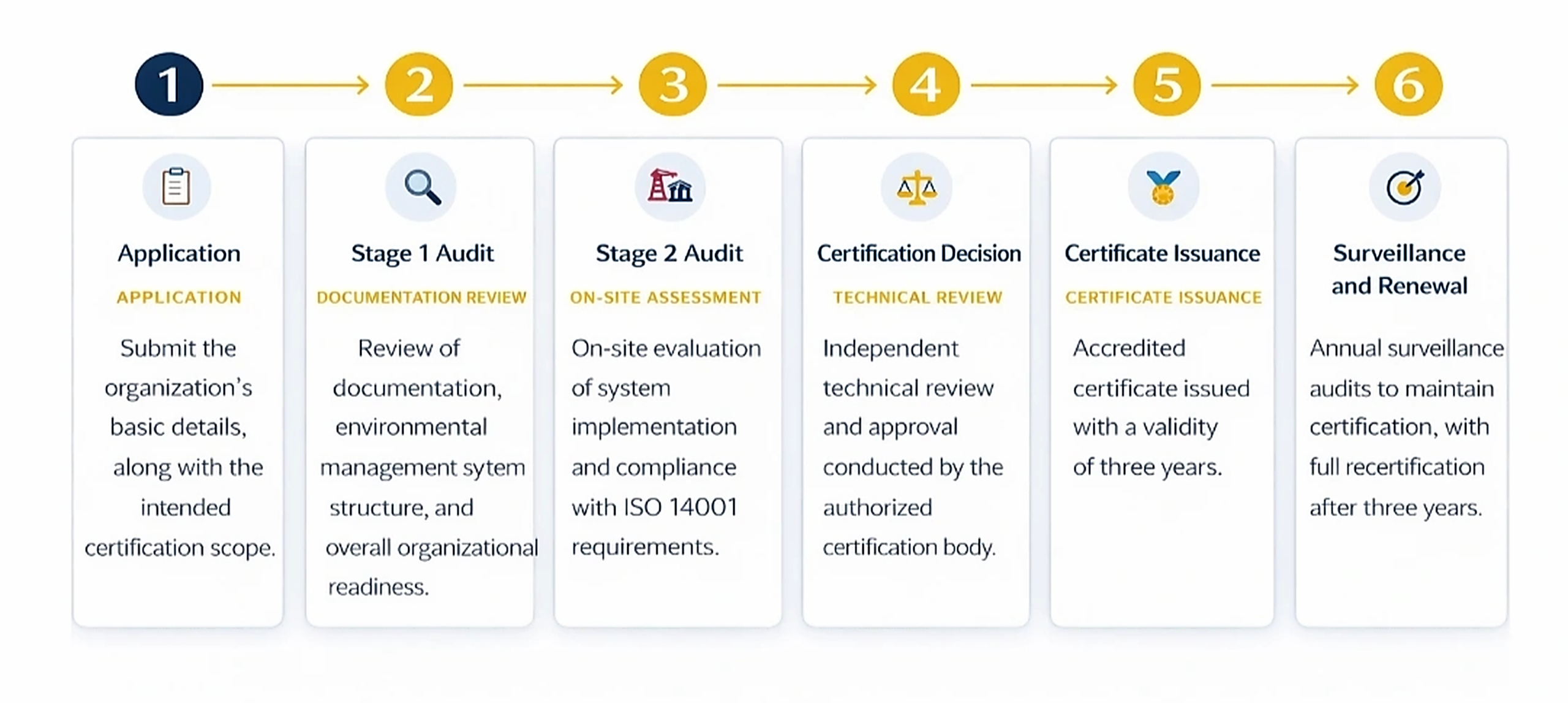
Why We Need to Choose Guardian for Manufacturing Industry
At Guardian Middle East LLC, based in Doha, we represent Guardian Assessment UK Ltd., a United Kingdom–based accredited certification body recognized by UAF (United Accreditation Foundation) and IAS (International Accreditation Service, USA). Through this representation, we support manufacturing organisations across the Middle East with ISO certification support and audit preparation, helping them demonstrate strong management systems for regional and international operations.
As one of the ISO certification companies serving the Middle East, Guardian Middle East LLC supports manufacturers with a structured certification journey focused on clarity, audit readiness, and practical implementation.
- Accredited and trusted approach– Certificates are issued through an accredited certification process recognized by UAF (United Accreditation Foundation) and IAS (International Accreditation Service, USA) and can be verified through recognized certificate verification databases, where applicable, supporting customer and partner confidence.
- Regional expertise– With a strong understanding of Middle East market conditions, buyer expectations, and procurement requirements, we support a smooth certification journey aligned with industry needs.
- Experienced auditors– Audits are conducted by qualified auditors with manufacturing sector experience, providing a professional and value-added assessment of management systems.
Ready for ISO Certification? Let’s Get Started
Want to strengthen your manufacturing operations with a system that buyers and tender teams trust? Talk to Guardian Middle East LLC to choose the right ISO standards for your factory and product scope, align documentation and controls across suppliers and sites, and move confidently toward certification. Share a few details about your products, locations, and current processes, and we’ll outline a clear and practical next-step plan.
Contact Guardian Middle East LLC (Doha) | Serving the Middle East
Location: Abo Hamour Area, Doha, Qatar
P.O. Box: 23277, Doha, Qatar
Mobile: +974 7770 2602 | +974 7213 7770
Email: info@guardian.qa
Website: www.guardian.qa
Start today and get a clear, audit-ready plan that strengthens your manufacturing operations and builds buyer trust across the Middle East.