
ISO Certification for Automotive Industry

ISO Certification for Automotive Industry
Quick Contact
Introduction
The automotive industry in the Middle East is a major driver of regional trade, mobility, industrial growth, and national development. From vehicle assembly and parts manufacturing to dealerships, service centres, logistics, and aftersales support, this industry operates in a demanding environment where safety, quality, reliability, and regulatory control are essential. To perform successfully in such a competitive and high-expectation sector, organisations must show a clear commitment to operational excellence and internationally recognised standards, and many businesses pursue ISO certification for automotive industry to strengthen credibility, consistency, and performance.
Guardian Middle East LLC supports automotive companies across the Middle East with ISO certification by helping organizations build clear documentation, effective controls, and audit readiness that reflect real operational risks and automotive industry expectations. This approach supports stronger process consistency, safer operations, and more reliable performance across sites, teams, service networks, and suppliers.
ISO’s Role in Quality and Efficiency for the Automotive Industry
ISO certification for automotive industry is more than a credential. It is a structured way to manage risk, improve operational control, and strengthen reliability in day-to-day activities.
- Ensuring Quality and Consistency- Quality and consistency are essential in automotive operations, where defects can lead to warranty claims, customer complaints, recalls, and brand damage. ISO 9001 provides a quality management system framework that supports control across critical processes, from supplier management and incoming inspection to production, service delivery, maintenance, and customer handling. It helps standardise procedures, reduce errors, improve traceability, and strengthen customer and stakeholder confidence.
- Enhancing Health and Safety- Automotive operations often involve heavy machinery, lifting equipment, paint and chemical exposure, electrical systems, workshop hazards, and high-volume service environments. ISO 45001 supports a systematic approach to identifying and reducing workplace risks, improving safety controls, strengthening training and accountability, and reducing disruption caused by incidents, injuries, and unsafe conditions.
- Minimising Environmental Impact- Environmental performance is increasingly important in the automotive sector due to emissions, waste, oils and fluids, hazardous materials, and resource consumption across workshops and manufacturing sites. ISO 14001 supports organisations in managing environmental aspects more effectively by helping reduce waste, improve resource efficiency, control emissions and pollution risks, strengthen emergency preparedness, and meet applicable environmental obligations.
- Boosting Operational Efficiency- ISO standards encourage a culture of continual improvement, which is valuable in automotive operations where delays, rework, parts issues, and process variation can be costly. By standardising processes, improving control, reducing inefficiencies, and supporting better planning, organisations can improve delivery reliability, reduce rework, strengthen service performance, and increase overall efficiency.
Key ISO Standards for the Automotive Industry
Guardian Middle East LLC supports certification for key ISO standards relevant to automotive operations, helping organizations strengthen control, reduce risk, and improve audit readiness.
- ISO 9001 (Quality Management System): Supports consistent quality across automotive production, service processes, customer handling, and supplier control.
- ISO 45001 (Occupational Health & Safety Management System): Essential for managing health and safety risks in workshops, assembly operations, warehouses, and service environments.
- ISO 14001 (Environmental Management System): Helps manage environmental aspects, including waste oils, emissions, hazardous waste, spill controls, and legal obligations.
- ISO 22301 (Business Continuity Management System): Supports operational continuity and structured response during disruptions affecting parts supply, service networks, and operations.
Middle East Market Access Expectations: Automotive Companies Are Preparing For
Automotive companies working across the GCC and wider Middle East are facing higher expectations for operational control, regulatory readiness, supplier oversight, technical documentation, and audit preparedness. Many fleet customers, government buyers, distributors, and procurement bodies expect clear records, controlled procedures, risk-based management, and consistent compliance with safety, quality, and environmental requirements across vehicle sales, parts supply, service operations, and logistics activities.
Key areas automotive companies often prepare for include
- GCC regulatory and operational expectations– Maintain controlled procedures, technical records, safety documentation, and traceability across vehicles, parts, service activities, and supply chains.
- Saudi Arabia project and supplier qualification requirements– Strengthen inspection records, supplier evaluation, risk controls, and documented operational processes to support approvals and supplier acceptance.
- UAE tenders and fleet procurement expectations– Improve documentation, performance monitoring, audit readiness, and consistent management systems to support tender participation and supplier qualification.
- Regional health, safety, and environmental expectations– Use controlled systems to manage workplace risks, environmental aspects, incident response, and emergency preparedness across workshops and facilities.
- Parts traceability and quality control readiness– Keep incoming inspection records, batch or serial traceability, warranty handling, NCR logs, and corrective action records organised to support reliability and reduce claims.
- Supplier and subcontractor control across borders– Use a clear supplier approval process, performance monitoring, and documented controls to reduce supply chain risk and service disruption.
- Multi-site consistency across operations– Standardise procedures, training, internal audits, and monitoring so quality and safety performance remain consistent across branches, service centres, and locations.
- Audit readiness for clients, buyers, and stakeholders– Maintain evidence of implementation, monitoring, risk controls, and continual improvement to support external audits, fleet evaluations, and stakeholder expectations.
ISO certification for the automotive industry helps companies build repeatable controls, documented evidence, and operational consistency that support audits, tender evaluations, supplier oversight, and regulatory expectations across Middle East markets.
ISO Certification Requirements
To achieve ISO certification for automotive industry, the company must demonstrate commitment to the following requirements:
- Top management commitment – Leadership must support the management system by providing direction, resources, and accountability.
- Legal and regulatory obligations – The organization must identify and meet applicable legal, regulatory, and customer requirements relevant to its operations.
- Establish a management system – A documented management system must be developed and implemented in line with the selected ISO standard.
- Comprehensive documentation and records – The organization must maintain effective documentation and evidence of implementation, monitoring, and control.
- Internal audits and management review – Regular internal audits and management reviews are required to verify effectiveness and drive continual improvement.
Request a Quote
Request a Quote
Request a Quote
Your Path to ISO Certification
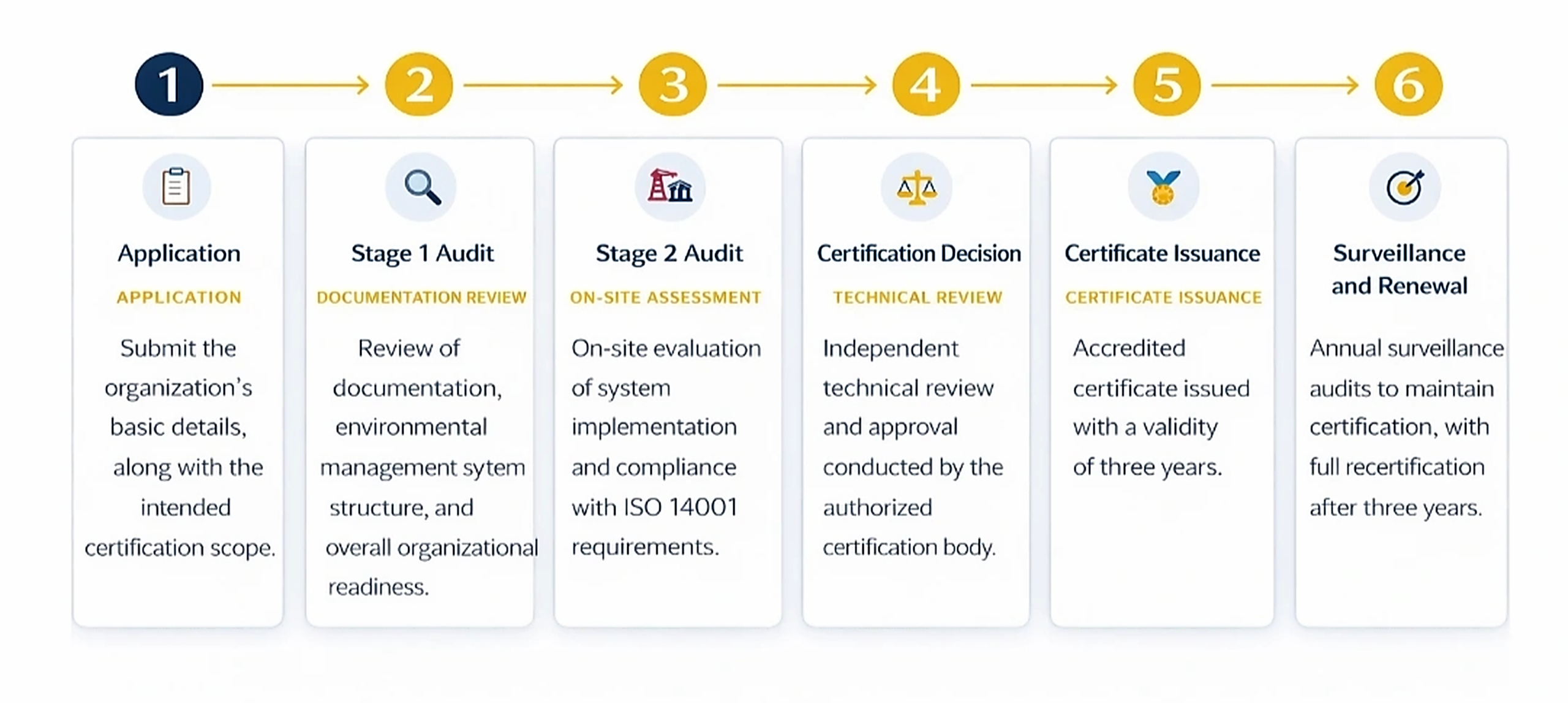
Who We Represent and How We Support Automotive Companies
At Guardian Middle East LLC, based in Doha, we represent Guardian Assessment UK Ltd., a United Kingdom–based accredited certification body recognized by UAF (United Accreditation Foundation) and IAS (International Accreditation Service, USA). Through this representation, we support automotive companies across the Middle East with ISO certification support and audit preparation, helping them demonstrate strong management systems for regional and international operations.
Guardian Advantage for Automotive Businesses in the Middle East
As one of the ISO certification companies serving the Middle East, Guardian Middle East LLC supports automotive businesses with a structured certification journey focused on clarity, audit readiness, and practical implementation.
- Accredited and trusted approach– Certificates are issued through an accredited certification process and can be verified through recognised certificate verification databases, where applicable, supporting customer and partner confidence.
- Regional expertise– With a strong understanding of Middle East market conditions, regulatory expectations, and fleet and service requirements, we support a smooth certification journey aligned with industry needs.
- Experienced auditors– Audits are conducted by qualified auditors with automotive sector experience, providing a professional and value-added assessment of management systems.
Ready for ISO Certification? Let’s Get Started
Want to strengthen your automotive operations with a system that buyers, fleet customers, and tender teams trust? Talk to Guardian Middle East LLC to choose the right ISO standards for your sites and service scope, align documentation and controls across operations and suppliers, and move confidently toward certification. Share a few details about your activities, locations, and current processes, and we’ll outline a clear and practical next-step plan.
Contact Guardian Middle East LLC (Doha) | Serving the Middle East
Location: Abo Hamour Area, Doha, Qatar
P.O. Box: 23277, Doha, Qatar
Mobile: +974 7770 2602 | +974 7213 7770
Email: info@guardian.qa
Website: www.guardian.qa
Start today and get a clear, audit-ready plan that strengthens your automotive operations and builds buyer trust across the Middle East.
Frequently Asked Questions
ISO 9001 is important because it ensures a consistent level of service quality, from the moment a customer books an appointment to the completion of the repair. It helps streamline workflows, minimize errors, and ensure customer satisfaction, which builds long-term loyalty and trust.
IATF 16949 is a technical specification for quality management systems in the automotive sector. It is based on ISO 9001 but includes additional requirements to address the specific needs of the automotive supply chain, with a strong focus on defect prevention and waste reduction.
Yes. Many global vehicle manufacturers and parts suppliers require or prefer to work with ISO-certified partners. Certification is a clear signal that your business operates with a high standard of quality, which can open doors to valuable partnerships and new business opportunities.
The automotive industry faces environmental challenges related to the disposal of hazardous materials like used oil, batteries, and tires. ISO 14001 helps companies establish a management system to handle these materials responsibly, reduce their environmental impact, and ensure compliance with local regulations.