
How to Get ISO 14001 Certification: A Step-by-Step Process
Showing your company’s dedication to sustainability is now a commercial need in an era of growing environmental consciousness. Environmental responsibility is demanded by consumers, investors, and regulatory agencies (particularly in light of aspirational objectives like Qatar’s National Vision 2030). Implementing an ISO 14001:2015 Environmental Management System (EMS) is the most efficient and internationally recognised method of demonstrating this commitment. Although obtaining certification may seem overwhelming, the process is methodical and structured. To demystify your route to environmental excellence, we have broken it down into a clear, step-by-step method.
What is an ISO 14001 Environmental Management System (EMS)?
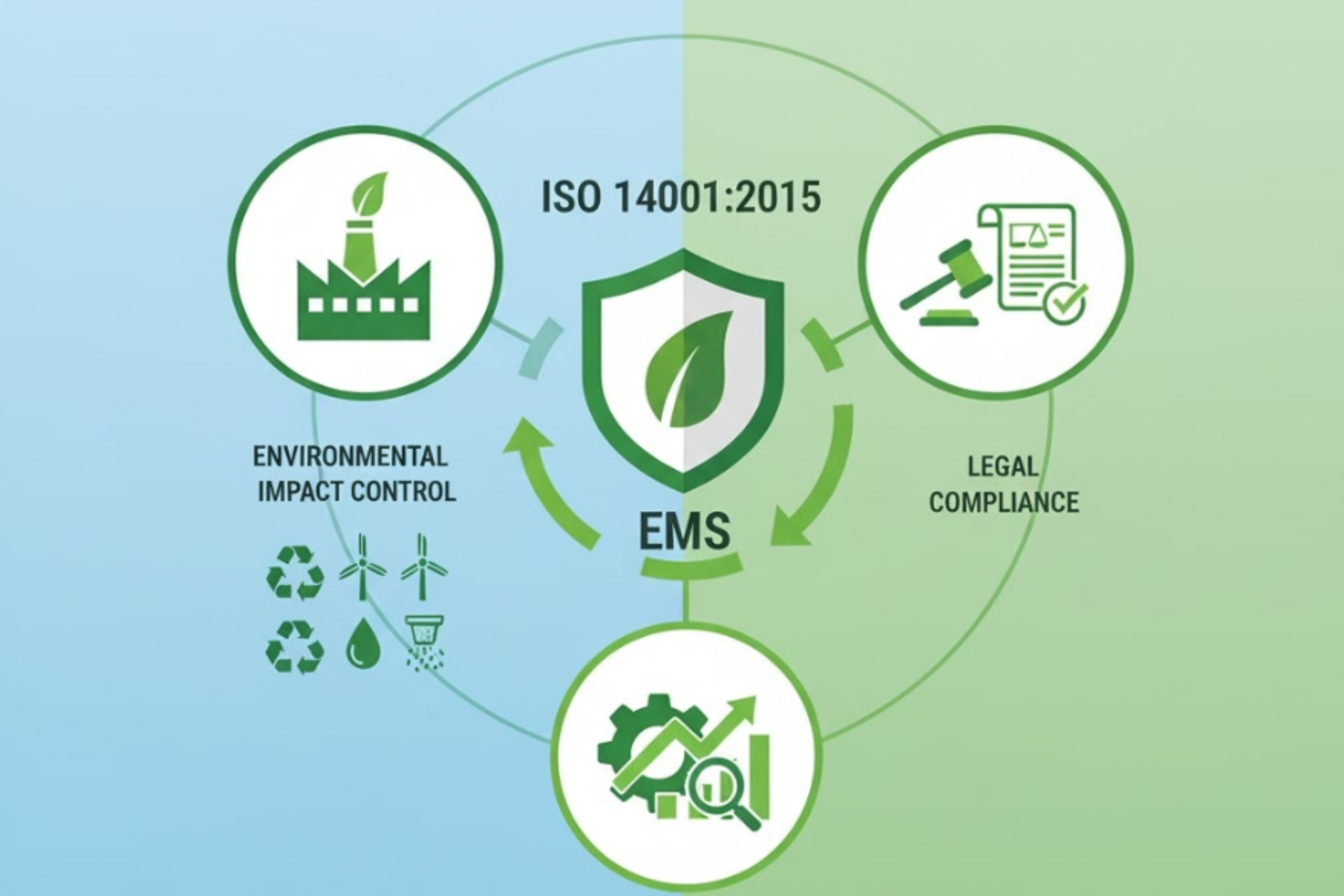
The worldwide standard that outlines the prerequisites for a successful Environmental Management System (EMS) is ISO 14001. In place of defining precise environmental performance standards, it offers a framework that a company can adhere to.
To put it simply, an EMS assists you in:
Determine and manage the environmental effect of your company (e.g., energy use, trash output, emissions).
Make sure you abide by all applicable environmental laws and rules.
Improve your environmental performance on a constant basis.
It’s an active tool for methodically handling your environmental obligations, supporting the social, economic, and environmental pillars of sustainability.
The ISO 14001 Certification Process: A 6-Step Guide
Here is the practical roadmap that most organizations follow to achieve certification.
Step 1: Preparation and Gap Analysis
This is the foundational stage. You can’t reach your destination without knowing your starting point.
- Secure Leadership Commitment: Obtaining complete support from your upper management is the first step. The implementation will not succeed if they do not provide their resources, support, and dedication.
- Conduct a Gap Analysis: Comparing your current environmental practices to the precise requirements of the ISO 14001 standard is an important stage in this process. This analysis will show you where you’re lacking and, more significantly, what you’re already doing well. One important service that a consulting partner like Guardian may offer is this.
Step 2: Planning Your EMS
Based on the gap analysis, you create the strategic plan for your EMS.
- Define Scope & Policy: Your EMS’s boundaries must be decided; for example, will it cover the entire organization or just a single location? After that, you will create your official Environmental Policy, which will serve as the foundation for your environmental pledges.
- Identify Aspects, Impacts & Risks: This is where the planning starts. Your operations’ “aspects,” such as the use of electricity or the disposal of garbage, and their “impacts,” such as resource depletion or land contamination, must be identified, as must all possible environmental changes.
- Determine Legal Requirements: All relevant environmental rules and regulations that you must abide by must be listed in a register.
Step 3: Implementation and Documentation
- Set Objectives & Targets: Establish SMART (specific, measurable, realistic, relevant, and time-bound) environmental goals based on your major impacts and risks. For instance, “Reduce office paper waste by 20% within 12 months.”
- Develop Documentation: To manage your operations and satisfy the standards, create the required (and slim!) paperwork, such as work instructions, processes, and records.
- Assign Roles & Responsibilities: Clearly state who in the EMS is in charge of what.
- Training & Awareness: This is very important. Every employee needs to get training on the environmental policy, their individual duties, and the significance of the EMS.
Step 4: Performance Evaluation (The “Check” Phase)
Your system is built. Now, you need to check if it’s working effectively.
- Monitoring & Measurement: To assess your performance, you need to keep an eye on and measure your key environmental metrics, which are the goals you established in Step 3.
- Conduct an Internal Audit: You must perform a thorough internal audit of your EMS prior to hiring an outside auditor. This serves as a “dress rehearsal” to identify and address any non-conformities, or places where you fall short of the standard.
- Hold a Management Review: Using information from your audits and monitoring, your top management must formally examine the EMS’s performance. The system’s continued suitability, sufficiency, and efficacy are guaranteed by this review.
Step 5: The Certification Audit (Stage 1 & Stage 2)
Once your internal audits and management review show that your EMS is stable and effective, it’s time to engage a third-party certification body (like Guardian).
- Stage 1 Audit (Readiness Review):In order to verify that your EMS design satisfies ISO 14001 criteria, the auditor will usually perform a “desktop audit,” going over your documentation (such as your policy, aspects register, and procedures). They will first determine whether significant gaps need to be filled before moving further.
- Stage 2 Audit (Implementation Audit): The primary on-site audit is this one. To confirm that you are actually carrying out your EMS processes, the auditor will visit your premises, speak with employees, examine documents, and watch operations.
Step 6: Certification and Continuous Improvement
- Receiving Your Certificate: The auditor will suggest that you be certified if the Stage 2 audit is successful (or after you have corrected any minor non-conformities). Following that, you will receive your official ISO 14001:2015 certificate, which normally has a three-year validity period.
- Surveillance Audits: The adventure is far from ended. Every year, the certification authority will carry out “surveillance audits” to make sure your EMS is still operating, getting better, and fulfilling the standards in order to keep your certification.
How Long Does the ISO 14001 Certification Process Take?
The honest answer to the most common question we get is: it depends. For a small business with a single location, the procedure could only take three to six months. For a large, complex, multi-location business (such one in manufacturing or oil and gas), it could take 12 to 18 months.
The timeline depends on:
- The scope and intricacy of your business.
- The level of sophistication of your current environmental policies.
- the staff and resources you are able to commit to the project.
Simplify Your Journey to ISO 14001 with Guardian
You don’t have to go it alone, but obtaining ISO 14001 certification is a life-changing investment in the future of your company.
Guardian Middle East LLC, a preeminent certified certification, training, and in Qatar and the Middle East, can expedite this entire procedure. Our knowledgeable staff offers the direction you require to create an efficient EMS that yields tangible financial and environmental advantages, starting with the preliminary gap analysis and continuing through your final certification audit.
Ready to demonstrate your commitment to a greener future?
Contact us today Get started on your ISO 14001 certification journey today – request a free quote or connect with our environmental management experts to discuss your goals.